My phone reached 87% battery health in July and I was so annoyed I made a spreadsheet.
Not because 87% is a disaster (it isn’t), but because I’d owned the phone (a Poco X5 Pro) for eleven months and I play a lot of games on it. So much so I just wanted some concrete data instead of that nagging sense of guilt when the message reappeared.
So from July to September, I logged all of it. Screen-on time, what games I played, how often I charged it, checked the battery health percentage weekly using Accu Battery. No assumptions going in. Just logging.
The Setup
Each Sunday night I would list 4 things:
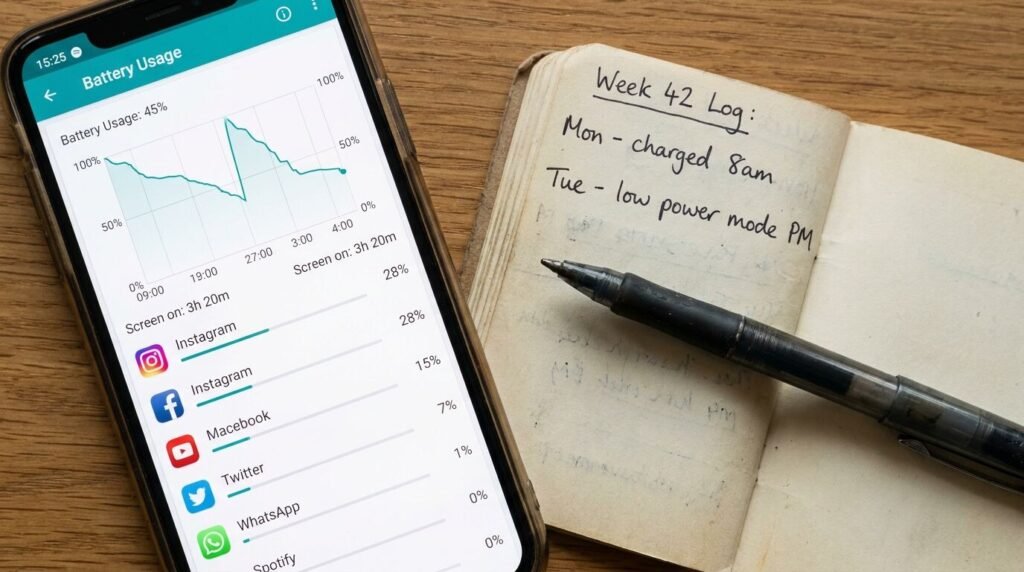
- battery health (from Accu Battery and cross checked with the phone’s built in battery info in settings)
- Total screen-on time for the week
- Hours spent specifically in games
- How I fueled that week: overnight, 8 bucks, fast chargers, cable brand, everything.
Starting numbers, July 6th:
- Battery health: 87%
- Weekly screen-on time: around 38 hours
- Average gaming time per week: around 19 hours
- Which games are in heavy rotation: BGMI, Genshin Impact and Subway Surfers for the mindless bus-ride sessions.
Month One: The “Blatantly” Obvious Wasn’t So Blatantly Obvious
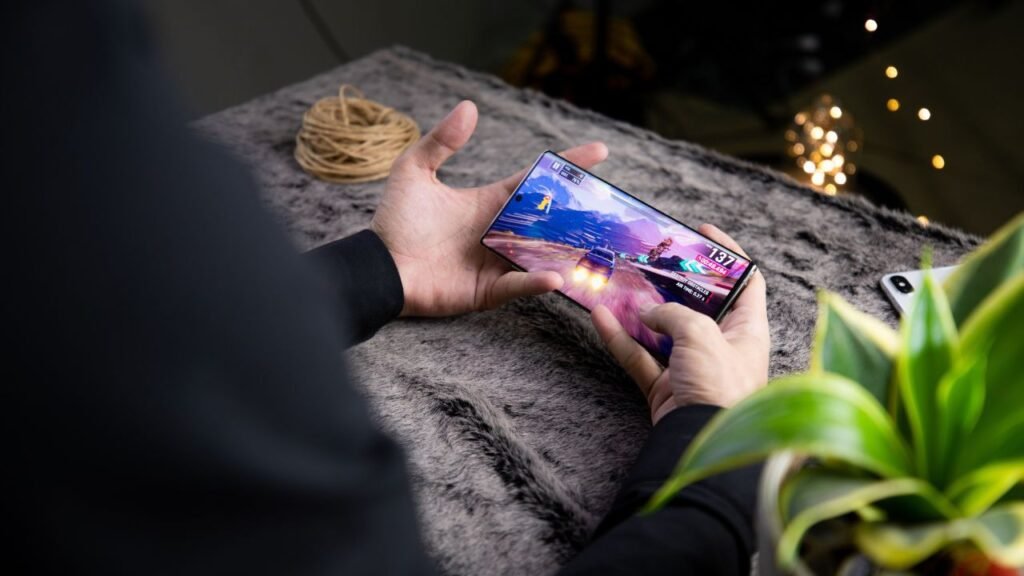
Before I even started, I knew Genshin Impact was going to be the villain. My phone was totally getting wrecked by the game, which is the biggest one I’ve ever played, heats up the back of my phone, and tears through my phone’s percent bar.
However, when I took a session-by-session look at drain with the app usage info from Accu Battery, I could tell that something was not right. Yes, Genshin used a lot of drain per hour, as far as hours I had in a week. But I didn’t play that much (maybe 5-6 hours a week) and certainly not all at once (mainly on the weekends).
BGMI however, I was playing almost daily, sometimes even twice. Though it consumed slower per hour than Genshin, simply the cumulative hours meant that BGMI was consuming more of my weekly battery cycles.
End of Month 1 numbers (August 3rd):
- Battery health: 85%
- Weekly screen-on time: 41 hours
- Weekly gaming hours: 22 hours (out of which I’ve spent 14 hours on just BGMI)
It was an incredible feeling. It was a feeling of 2% off in a month was really a lot. That was when I just gave up guessing, I started doing what I had done.
Month Two The Charging Habit I Thought Wasn’t Important
This is what actually did take me by surprise.
I’ve always figured it was the actual gameplay that drained the battery the most: the heating, the constant high CPU/GPU load, the whole nine yards. Turns out I was right. Except that, looking through the charges from those weeks, something caught my eye.
My phone was plugged in every. Single. Night.
Plugged in at around 11 PM, sitting at 100% from maybe 1 AM until I got up at 7. Sitting at 100% six hours straight over and over and over.
I’d read in a forum thread I can’t find now, once, that a battery loses capacity more quickly if left at 100% charged for a while than if it is regularly cycled between 20-80%. I thought that too when I read it. Now I know better.
So mid-August I switched things up:
- Began running the stock “charge optimization” feature to slow down when you get close to 100% based on your usage patterns
- I had been unplugging approximately 85-90% when I was playing late into the game too.
- We used a slower charger while sleeping (a humble 18W brick as opposed to the 67W one that shipped in the box) to generate less heat during those lengthy plugged-in periods.
Gaming hours didn’t really move this month. I was still sitting at 20-23 hours a week, same games, same intensity.
End of Month 2 numbers (September 1st):
- Battery health: 84%
- Weekly screen-on time: 40 hours
- Weekly gaming time: 21 hours
Just 1% decline this month, down from 2% last month, with pretty much the same amount of gaming. The only real difference was the charging pattern. I’m not going to argue with one month of data being a good indicator of causality (battery degradation is not that clean), but it was close enough that I kept the new charging pattern going.

Month Three: Now We’re Going to See if It Was Just a Fluke
I was curious to find out if this gradual decrease in Month 2 was just noise or if in fact it was a true trend, so I ensured the new charging routine continued as is but held everything else constant for Month 3.
Games also remained the same, but I did have a little Call of Duty Mobile chunk after a friend got me interested in again – maybe 4-5 hours a week on top of everything else. If anything my gaming total might have gone up a little this month.
End of Month 3 numbers (September 28th):
- Battery health: 83%
- Weekly screen-on time: 43 hours
- Weekly gaming time: 25 hours
One percent down again this month, in spite of logging more hours of gaming than we’ve ever logged in a single month. That’s the number that actually made me believe that the change in charging behavior was real, and not just some weird coincidence.
What Actually Surprised Me, Summed Up
The game I guessed was causing all the issues (Genshin Impact) didn’t end up being the killer, all down to the total hours I used in the day. Granted the game does drain the battery per hour but I was not playing it the hours a week that meant it was affecting it.
My constant and casual bouts of BGMI, the “lighter” game, surprisingly accumulated more overall battery stress due to mere overuse. And the charging routine, which I really wasn’t all that fussed about, seemed to be much more relevant than the actual game I was playing. You can also read:
- Why My PC Randomly Reboots Instead of Crashing to Desktop
- Why More PC Games Are Quietly Dropping 32-bit Support And What It Actually Means for Older Hardware
Total Numbers, Start to Finish
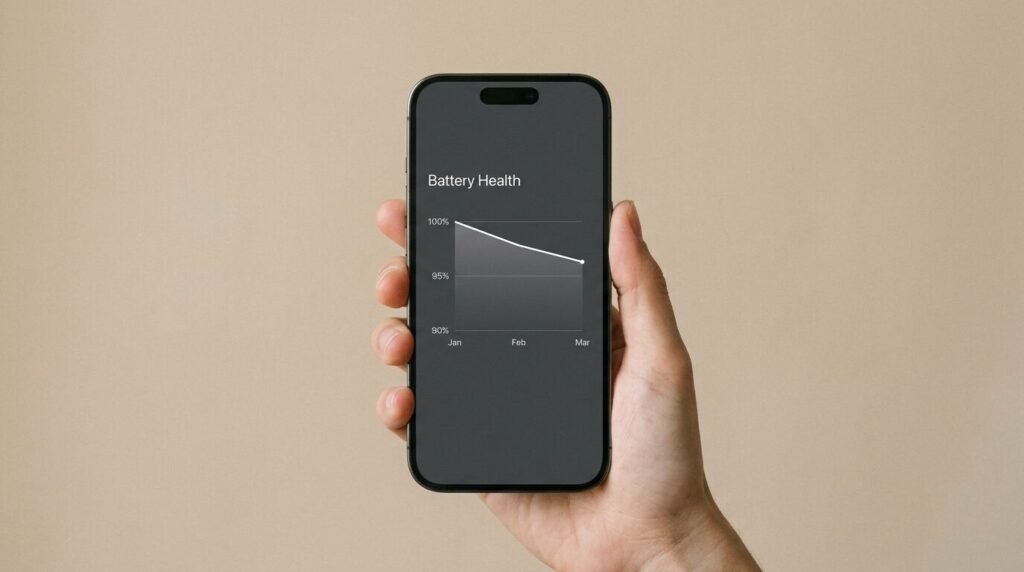
- Battery health: 87% 83% over three months
- Average hours spent gaming each week: increased from 19 hours to 25 hours over the two weeks
- Total drop: 4% over roughly 13 weeks
That’s not a dramatic decline for regular, heavy use throughout each day, either; phone batteries are rated to experience that level of wear down over time, too. What was striking to me wasn’t even the number, but that the decline became perceptibly much slower once I altered just one practice that had nothing to do with what games I happened to be playing.
What I Would Change if I Were to Begin This Phone All Over Again
The only thing I wish I had done differently from day one is establish charge optimisation and the 85% overnight habit right from the beginning instead of nearly a year in.
I’d also kill the notion that the most graphically intensive, flashy game must also be the most battery hungry. The total hours played is nearly as relevant as how taxing any one game might be.
Honestly, I’ll probably never be the person to nurse the perfect charge cycle every time: I’ll still sometimes still charge overnight when I’m feeling lazy and can’t be bothered to think about it. But the fact that there’s a tangible result of doing it right does make me care a lot more.
If you’ve been frustrated by your own phone’s battery draining a lot faster than anticipated I would honestly just monitor it for a few weeks and see if you’d see the same trend before making any changes. You might be playing the wrong game entirely, like I almost was.

