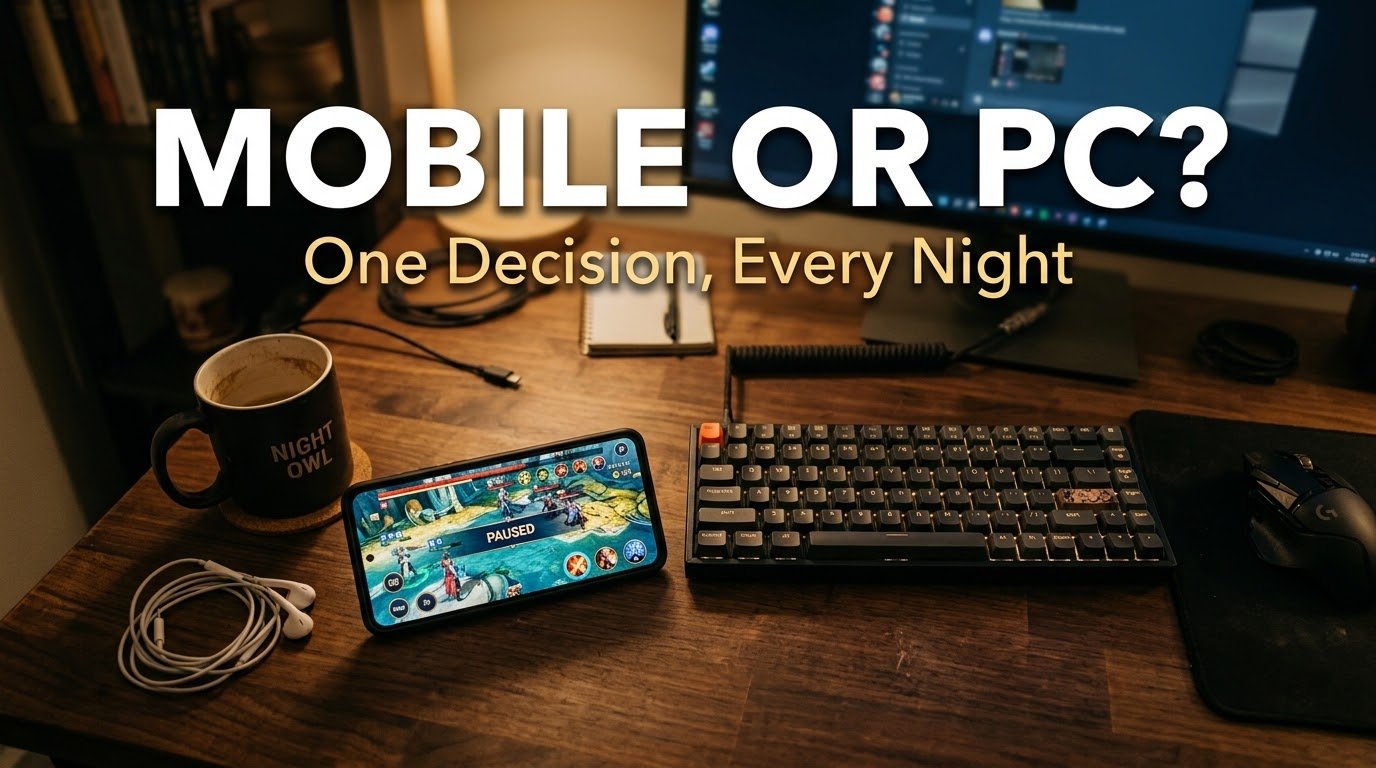
I still remember the exact moment I had to choose sides. It was a Tuesday night, I had about 40 minutes before I needed to sleep, and I was staring at two options: boot up my gaming PC and wait through Windows updates, driver checks, and a game launcher that decided now was the perfect time to patch itself, or just pick up my phone and jump straight into a match.
I picked up my phone. And honestly, that small moment made me rethink everything I believed about “real” gaming.
I’ve owned a gaming PC for close to eight years now, and somewhere along the way I also became a “phone gamer” without really planning it. So this isn’t some theoretical comparison pulled from spec sheets. This is from someone who has rage-quit both a laggy mobile match and a PC game that crashed mid-boss-fight, losing 45 minutes of progress on both.
Let’s break this down properly, without the fanboy nonsense you usually find online.
Why This Question Even Matters
A lot of people treat this like a loyalty test, like you have to pick a tribe and defend it forever. That’s silly.
Gaming isn’t one single activity anymore. Sometimes you want a quick five-minute distraction while waiting for a bus. Other times you want to sink three hours into a game with a controller in hand and nowhere to be. Those are two completely different needs, and honestly, two different tools solve them best.
The real question isn’t “which is better.” It’s “which fits your actual life.”
My Honest Experience With Mobile Gaming
I got back into mobile gaming during a period when I was traveling a lot for work. Carrying a laptop everywhere, let alone a gaming rig, just wasn’t happening.
I started with Genshin Impact on my phone, mostly out of curiosity. I expected a watered-down, ad-stuffed time-waster. I was wrong. The game looked genuinely good, ran smoothly on my mid-range phone, and I could pause anytime a call came in.
That’s the biggest thing nobody tells you about mobile gaming: the convenience factor changes how you play, not just where you play.
Some things I learned the hard way:
- Battery drain is real. I once played Call of Duty: Mobile for two hours straight during a flight delay and watched my battery drop from 90% to 12%. Lesson learned — always carry a power bank if you’re gaming on the go.
- Heat matters more than people admit. My phone got uncomfortably warm during long sessions, and I later found out this can affect long-term battery health.
- Touch controls have a real learning curve. I lost more shooter matches than I’d like to admit because tapping a tiny virtual button isn’t the same as clicking a mouse.
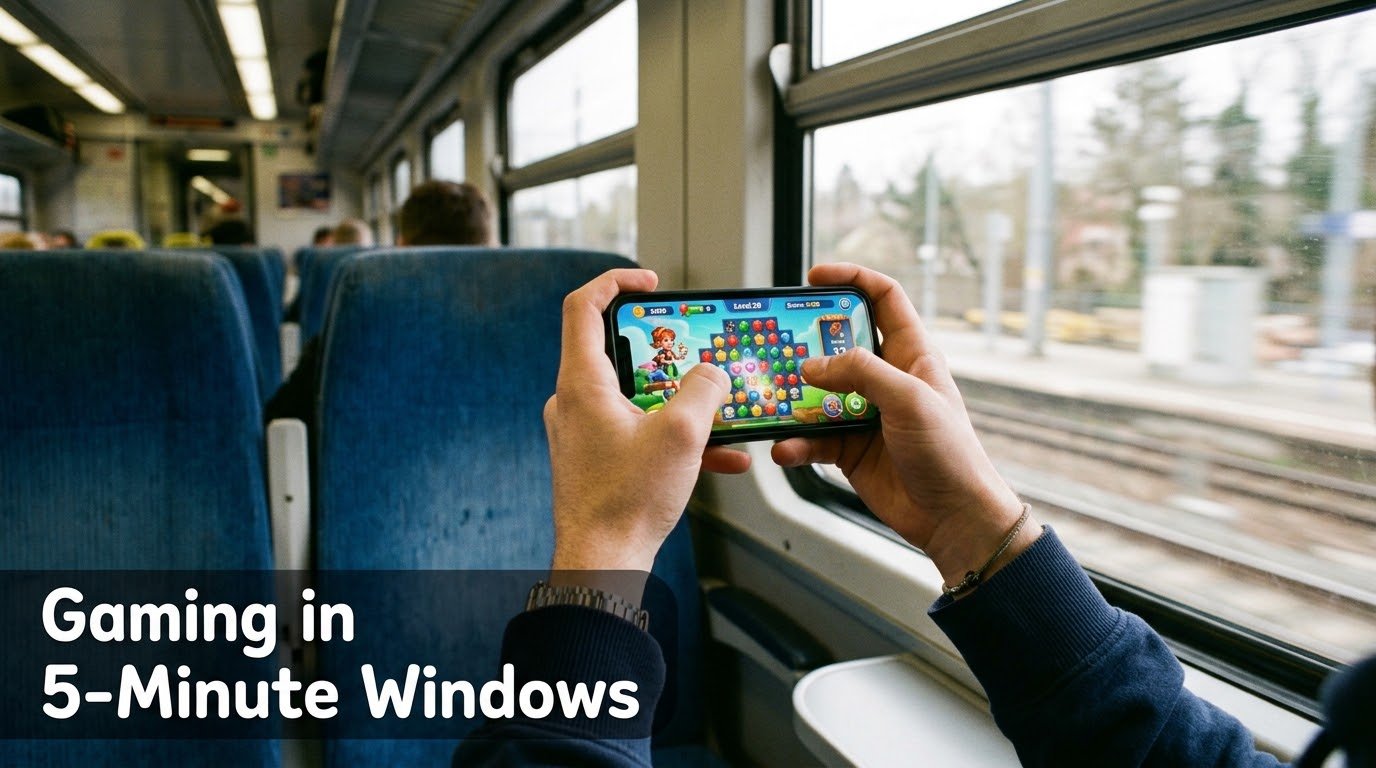
But here’s what surprised me: games like PUBG Mobile, Clash Royale, and Asphalt 9 are genuinely well-designed for short bursts. You don’t need a “session.” You need five minutes, and you’re satisfied.
My Honest Experience With PC Gaming
Now, PC gaming is a different beast entirely, and I say that with love and mild frustration.
My current setup is nothing fancy, an RTX 3060, 16GB RAM, a mechanical keyboard I definitely paid too much for. But even with a “modest” setup like that, the difference in visual quality and control precision compared to mobile is night and day.
I remember installing Elden Ring for the first time and just sitting there for a good ten minutes appreciating the lighting in the opening area. That kind of immersion is hard to replicate on a 6-inch screen.
But PC gaming comes with its own headaches:
- Setup time is real. Downloading a 90GB game, waiting for updates, tweaking graphics settings until it doesn’t stutter, that’s a whole ritual before you even start playing.
- Cost adds up fast. Between the GPU, the monitor, the peripherals, and the games themselves, I’ve probably spent more on PC gaming in one year than I have on mobile gaming in five.
- It’s not portable. Obvious, but worth saying. You’re tied to a desk, a chair, and usually a room with decent lighting so you’re not squinting at reflections.
One mistake I made early on: I bought a mid-range GPU expecting to run everything on max settings. I didn’t research properly, and I ended up frustrated trying to run Cyberpunk 2077 at a playable frame rate. Lesson learned always check benchmark videos for your specific hardware before buying a game you’re excited about.
A Simple Way to Decide What’s Right for You
Instead of just telling you “it depends,” here’s the actual thought process I’d walk a friend through if they asked me this question over coffee.
Step 1: Think about your available time in a typical day. If your gaming happens in unpredictable 10–20 minute windows, mobile wins. If you regularly have 1–2 hour blocks free, PC starts making more sense.
Step 2: Consider your budget honestly. A solid gaming phone experience can start from what you already own. A capable gaming PC realistically starts around $600–800 if you’re building smart, and can go up fast.
Step 3: Think about the type of games you actually enjoy. Love strategy, RPGs, or story-heavy games with deep mechanics? PC generally offers more depth and better visuals. Enjoy casual, competitive, or quick-reflex games? Mobile has genuinely caught up in this space.
Step 4: Test before you commit. Before buying anything expensive, I’d suggest actually trying both seriously for two weeks. Play mobile titles like Clash of Clans, PUBG Mobile, or Mobile Legends. Then borrow or visit a friend’s PC setup and play something like Valorant or Stardew Valley. You’ll know within days which one feels natural to you.
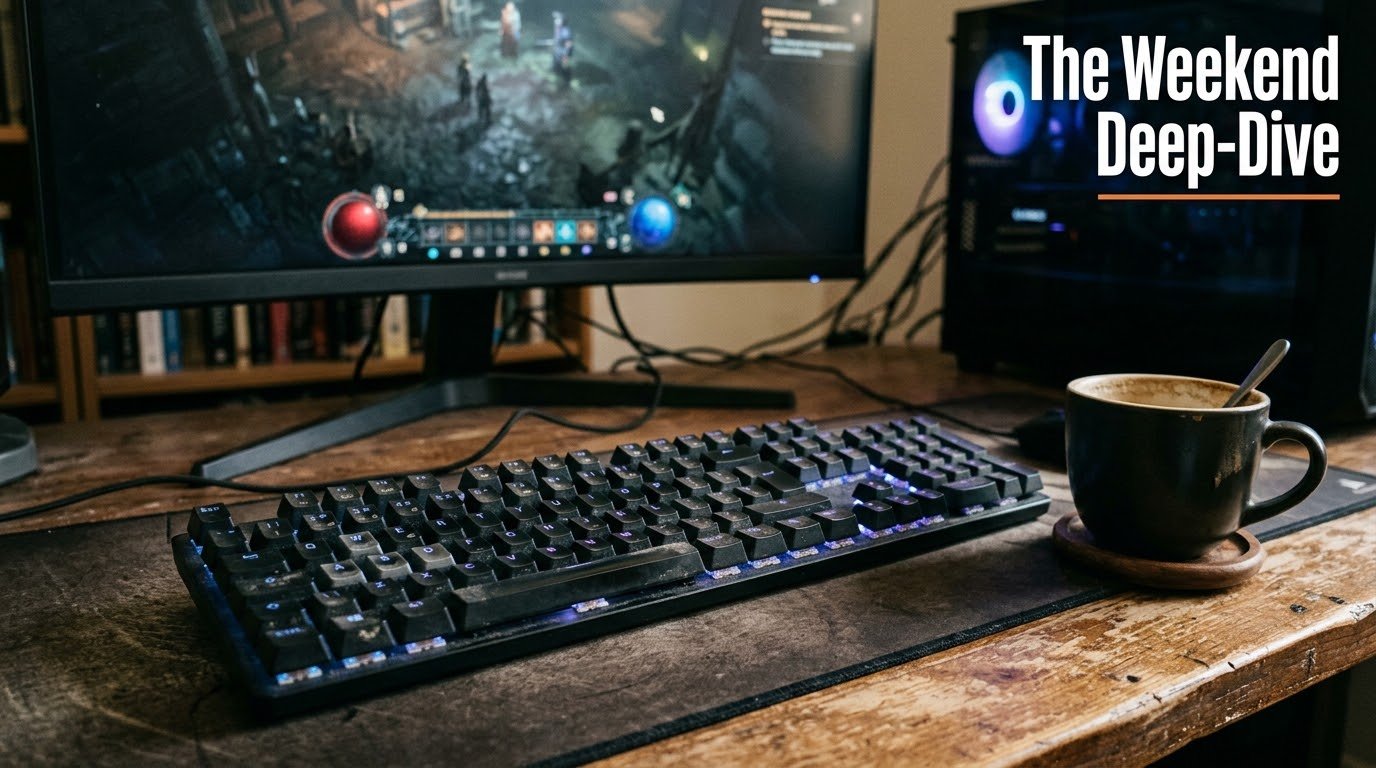
Step 5: Consider a hybrid approach. This is what I eventually landed on. I use mobile gaming for daily short sessions and PC gaming for weekend deep-dives. It’s not a betrayal of either side — it’s just being practical.
Real Examples From People I Know
My cousin is a perfect mobile-first case. She works long shifts, commutes by train, and genuinely doesn’t have room in her life for a dedicated gaming setup. Games like Genshin Impact and Candy Crush fit perfectly into her lifestyle. She’s not “missing out”, she’s optimizing for her reality.
My friend, on the other hand, works from home and treats gaming as his main hobby. He built his own PC, learned how to overclock safely (after one scary overheating incident), and now genuinely enjoys the process of upgrading parts as much as playing the games themselves.
Neither of them is doing it “wrong.” That’s the whole point.
Common Mistakes People Make When Choosing
Mistake 1: Buying an expensive gaming phone without checking actual game compatibility. Not every “gaming phone” performs the same across every title. Always check reviews for the specific games you play most.
Mistake 2: Overspending on a PC build before knowing if you’ll actually use it regularly. I’ve seen people buy high-end rigs and then barely play once a month. Start modest, upgrade later.
Mistake 3: Ignoring internet quality. Online mobile games can be brutal on weak Wi-Fi or spotty mobile data. Same goes for PC multiplayer. Test your connection stability before blaming the platform for lag.
Mistake 4: Assuming one platform is objectively “better.” It’s not about better. It’s about better for you, right now, in your current life situation.
Final Thoughts
If you’re expecting me to crown a winner, I won’t, because there genuinely isn’t one. I game on both, depending on my mood, my schedule, and honestly, how tired I am that day.
If your life is busy, unpredictable, and mostly on-the-go, mobile gaming will serve you better than people give it credit for. If you crave deep immersion, better visuals, and don’t mind investing time and money into a setup, PC gaming remains genuinely rewarding.
The best advice I can give you, from someone who’s made expensive mistakes on both sides, is this: don’t buy into hype from either camp. Try both with an open mind, pay attention to how each one actually fits into your daily routine, and let that decide for you.
That Tuesday night I mentioned earlier? I still remember picking up my phone instead of my PC. But last weekend, I spent four hours on my PC finishing a game I’d been looking forward to for months.
Both moments felt right. And that’s really the answer.